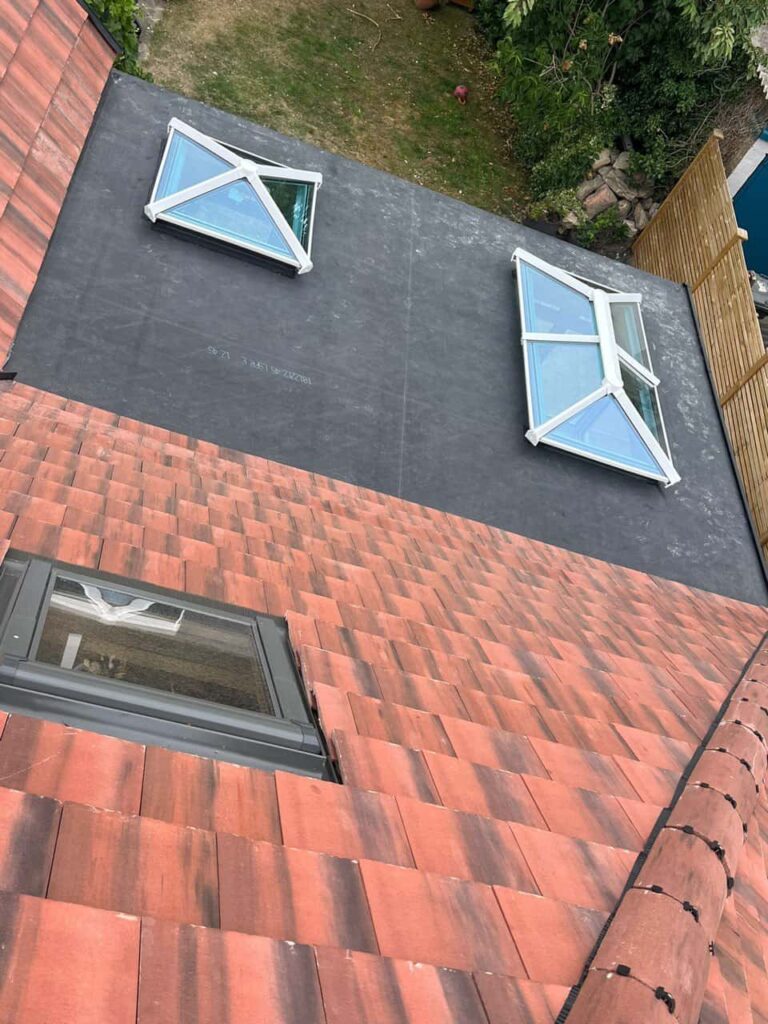
Discovering a leak in your home can be frustrating, especially when your roof appears to be in good condition from ground level. Many homeowners assume that roof leaks only occur when tiles are missing or have been blown off during bad weather. In reality, a roof can develop leaks for a variety of reasons, even when every tile appears to be in place.
For homeowners in Linton, Cambridgeshire, understanding the hidden causes of roof leaks can help prevent more extensive damage and ensure problems are resolved before they worsen. At Linton Roofing Repairs, we provide professional roof inspections and repairs to identify the true source of leaks and restore your roof’s weatherproof performance.
Damaged Lead Flashing
Lead flashing is used to create watertight seals around roof features such as chimneys, valleys and roof junctions.
Over time, flashing can crack, lift or separate from the surrounding structure due to weather exposure and natural movement. Even if every roof tile remains intact, damaged flashing can allow rainwater to enter the roof.
Professional repairs restore these vulnerable areas and prevent further water ingress.
Worn Roofing Underlay
Beneath the tiles sits a protective roofing underlay that acts as a secondary barrier against moisture.
As roofs age, this underlay can deteriorate, tear or lose its effectiveness. Water that passes beneath the tiles during heavy rain may then find its way into the roof structure, even though the tiles themselves appear undamaged.
A professional inspection can determine whether the underlay is contributing to the leak.
Cracked or Slipped Mortar
Many roofs rely on mortar to secure ridge tiles, verge tiles and chimney components.
Although the roof covering may appear complete, cracked or deteriorating mortar creates small gaps where rainwater can enter. These openings are often difficult to spot from ground level but can lead to persistent leaks if left untreated.
Prompt repairs help maintain the roof’s weather resistance.
Blocked Roof Valleys
Roof valleys collect and direct large amounts of rainwater towards the guttering.
Leaves, moss and other debris can accumulate in these areas, preventing water from flowing away efficiently. When water backs up, it may penetrate beneath the roofing materials and cause leaks inside the property.
Regular maintenance helps keep roof valleys clear and functioning correctly.
Damaged Chimneys
Chimneys contain several components that may become vulnerable over time.
Worn pointing, damaged flashing or small cracks in the chimney structure can all allow moisture to enter around the chimney, creating the appearance of a roof leak even though the roof tiles remain intact.
Professional roofers can identify whether the chimney is the true source of the problem.
Condensation Can Be Mistaken for a Roof Leak
Not every sign of moisture inside a roof space is caused by rainwater.
Poor ventilation within the loft can lead to condensation forming on roof timbers and other surfaces. Over time, this moisture may drip onto insulation or ceilings, creating symptoms that resemble a roof leak.
A professional assessment helps distinguish between condensation issues and genuine roofing defects.
Tiny Cracks in Roof Tiles
Roof tiles do not always have to be missing to allow water through.
Hairline cracks caused by age, frost or impact damage can let moisture penetrate during periods of prolonged rainfall. These cracks are often impossible to identify from the ground and usually require a close inspection.
Replacing damaged tiles promptly helps maintain the roof’s integrity.
Problems with Guttering
Sometimes the source of a roof leak is not the roof covering itself.
Blocked or damaged gutters can overflow during heavy rain, allowing water to run behind the guttering and enter vulnerable parts of the roofline. This can lead to internal damp patches that are easily mistaken for a roof defect.
Keeping gutters clear and in good condition supports the overall performance of the roofing system.
Why Professional Roof Inspections Matter
Roof leaks are not always straightforward to diagnose.
Water often travels some distance from the original point of entry before becoming visible inside the property. This makes it difficult to identify the true cause without professional knowledge and experience.
At Linton Roofing Repairs, we provide comprehensive roof inspections and repair services throughout Linton, Cambridgeshire. Our experienced team carefully investigates every part of the roofing system to locate the source of leaks and carry out effective, long-lasting repairs.
Signs You Should Arrange a Roof Inspection
A professional inspection is recommended if you notice:
- Damp patches on ceilings or walls.
- Water entering during heavy rain.
- Peeling paint near the ceiling.
- Damp insulation in the loft.
- Water marks around chimneys.
- Persistent leaks despite no visible missing tiles.
Early diagnosis often prevents more extensive damage from developing.
Conclusion
A leaking roof does not always mean that tiles are missing. Problems such as damaged flashing, deteriorating underlay, blocked valleys, chimney defects and cracked mortar can all allow water to enter while the roof appears intact from the outside. Identifying the true cause early helps protect your home and ensures repairs address the problem at its source.
For homeowners in Linton, Cambridgeshire, Linton Roofing Repairs provides professional roof inspections and expert repair services designed to resolve leaks efficiently and restore your roof’s long-term performance. If you have noticed signs of a roof leak, our experienced team is ready to provide reliable advice and dependable roofing solutions.
Call us on: 01223 655 294
Click here to find out more about Linton Roofing Repairs
Click here to complete our contact form and see how we can help with your roofing needs.