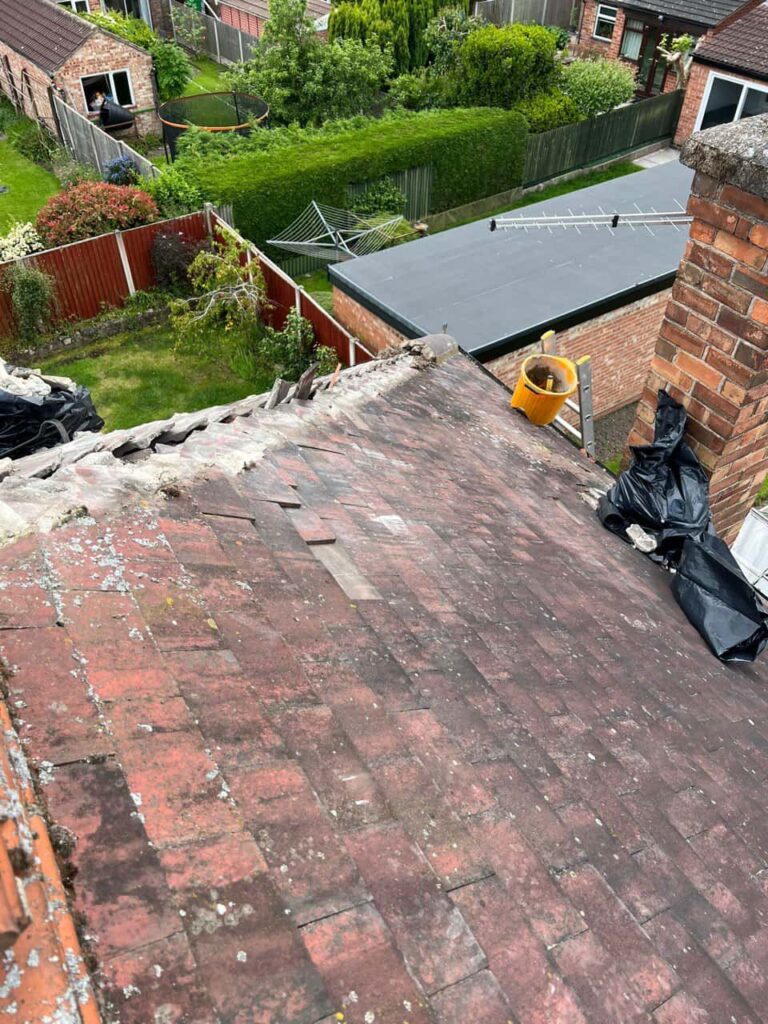
A roof that remains dry during light showers but leaks during heavy rain usually has a defect that becomes vulnerable only when exposed to a greater volume of water. The problem may also depend on wind direction, how long the rainfall lasts and whether drainage components can cope with the flow.
Intermittent leaks should not be dismissed simply because they stop when the weather improves. Water may still be entering the roof structure during severe conditions and affecting underlay, battens, insulation or internal finishes before becoming visible.
What Causes a Roof to Leak During Heavy Rain?
Heavy rainfall tests the entire roofing system. Tiles, flashing, valleys, gutters and underlay must work together to move a large amount of water away efficiently.
Common causes include:
- Cracked, slipped or poorly aligned tiles
- Deteriorated lead flashing
- Blocked valleys, gutters or outlets
- Weaknesses around chimneys and roof penetrations
- Damaged or sagging underlay
- Failed flat roof seams
- Wind-driven rain entering beneath coverings
- Water backing up at restricted drainage points
A professional inspection should consider both the location of the internal dampness and the route water may have followed before reaching it.
Wind-Driven Rain Can Enter Small Gaps
During calm rainfall, water generally travels down the roof in the expected direction. Strong wind can force it sideways or upwards beneath tile overlaps and around junctions.
A gap that remains dry in ordinary showers may therefore admit water when rain strikes from a particular direction. This is common around roof edges, ridges, hips, chimneys and abutments, where several materials meet.
The weather conditions present when the leak appears can provide valuable clues during an inspection.
Heavy Rain Can Overwhelm Roof Valleys
Valleys carry water from two adjoining roof slopes, meaning they handle more rainfall than many other parts of the roof. Leaves, moss and fragments of mortar can restrict this flow.
During light rain, water may pass through the remaining space without causing a problem. In a downpour, it can rise behind the obstruction and reach beneath nearby tiles. Damaged valley linings or poorly formed joints can make the area even more vulnerable.
Blocked Gutters Can Cause Water to Back Up
Gutters must receive and discharge water quickly enough to prevent overflow. If they are blocked, poorly aligned or unable to drain freely, heavy rain may cause water to spill over their edges.
In some situations, backed-up water can reach roof timbers, fascia boards or the lower edge of the underlay. The apparent roof leak may therefore originate from a drainage problem rather than a defect higher up the slope.
Flashing Defects May Only Leak Under Sustained Flow
Lead flashing protects the junctions around chimneys, walls and roof projections. Small splits, lifted edges or failed joints may not admit water during a brief shower.
Heavy or prolonged rain allows more water to pass over these weaknesses, increasing the possibility of it entering behind the flashing. Once inside, moisture may travel along the roof structure before appearing elsewhere.
Cracked or Displaced Tiles May Be Partially Protected
A damaged tile is not always exposed to the same amount of water. Surrounding tiles may provide enough protection during light rainfall, but heavier flow can find its way through the defect.
The tile should also be checked to establish why it cracked or moved. Weak battens, corroded fixings or movement in adjoining materials may need attention if the repair is to remain effective.
Underlay Can Hold Water Until It Overflows
Underlay acts as secondary protection beneath the roof covering. If it is intact and correctly supported, it should guide incidental moisture towards the eaves.
Torn, sagging or deteriorated underlay may allow water to collect. A small amount might remain contained or evaporate, while sustained rainfall can cause the affected area to overflow and release water into the roof space.
This concealed deterioration can be difficult to identify without lifting selected roof materials.
Flat Roof Drainage May Be Too Slow
Flat roofs rely on slight falls that direct water towards outlets. Heavy rain can expose low points, blocked drainage or inadequate surface levels.
If water gathers faster than it can drain, it may rise around seams, upstands or other vulnerable details. Persistent standing water can also place prolonged pressure on areas that are already cracked, blistered or poorly bonded.
The Leak May Take Time to Become Visible
Water does not always drip into a room immediately. It can soak into insulation, travel along timber or spread across the upper surface of a ceiling.
This explains why dampness may appear after the heaviest rain has passed. It also means the visible mark may not sit directly beneath the external fault.
Useful details to note include:
- How long the rain had been falling before the leak appeared
- Whether strong wind accompanied the rain
- Which direction the weather was coming from
- Whether the damp patch grows or changes position
- Whether gutters or valleys were overflowing
- How long the area remains damp afterwards
These observations can help a roofer narrow down the likely source.
Why the Cause Should Be Investigated Promptly
An intermittent leak can gradually worsen as repeated moisture weakens surrounding materials. Underlay may tear further, battens can remain damp and small openings may enlarge through movement and weather exposure.
Applying sealant to the most obvious area is not always effective. The repair should address the actual entry point, the reason it failed and any connected damage beneath the covering.
Conclusion
A roof that leaks only during heavy rain may have a small defect that becomes exposed under increased water flow, wind pressure or restricted drainage. Common causes include damaged tiles, failed flashing, blocked valleys, overflowing gutters and deteriorated underlay.
Linton Roofing Repairs can inspect leaking roofs in Linton, Cambridgeshire, trace the source of intermittent water ingress and recommend an appropriate repair. If your roof leaks during heavy or prolonged rainfall, contact the team to arrange a professional assessment.
Call us on: 01223 655 294
Click here to find out more about Linton Roofing Repairs
Click here to complete our contact form and see how we can help with your roofing needs.