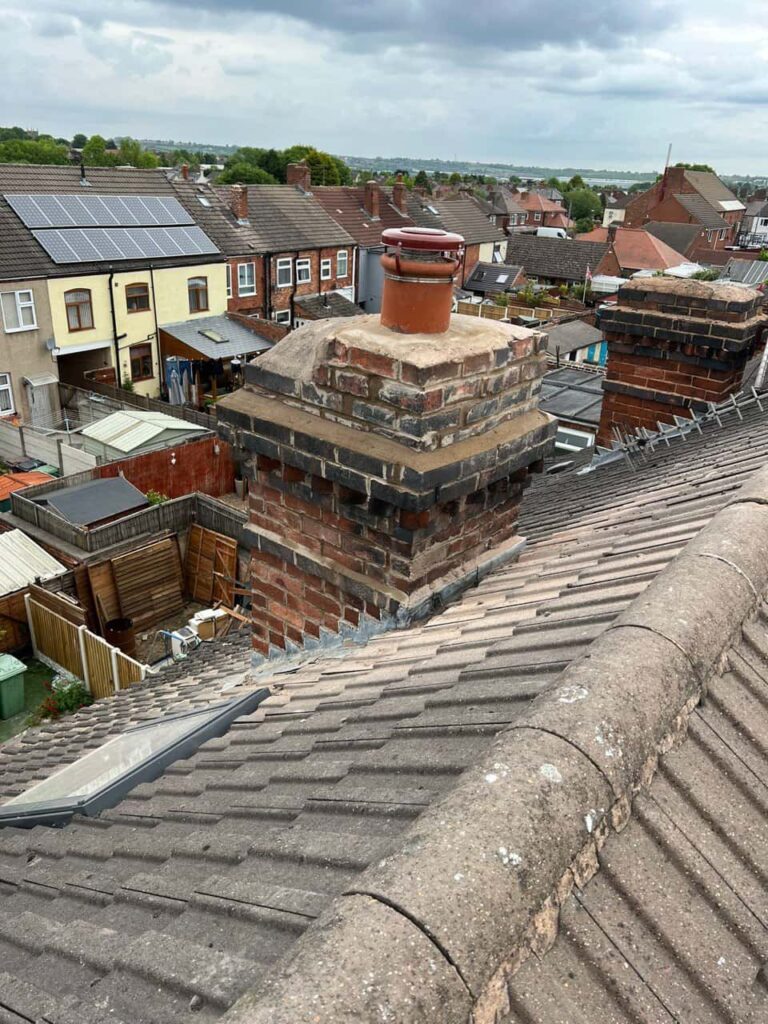
Chimneys are constantly exposed to changing weather conditions, including rainfall, wind, frost and temperature fluctuations. Over time, these elements can cause the mortar between bricks to weaken, crack or gradually wash away. As the mortar deteriorates, gaps develop within the brickwork, making it easier for moisture to enter and potentially affecting the stability and condition of the chimney.
Professional chimney repointing is an important maintenance task that helps protect exposed brickwork and maintain the condition of the chimney. For homeowners in Linton, Cambridgeshire, addressing deteriorating mortar early can help prevent water penetration, limit further masonry damage and preserve the roof’s overall weather resistance.
Why Chimney Repointing Is Important for Protecting Brickwork
Restoring Deteriorating Mortar Joints
Mortar joints hold individual bricks together and help protect the spaces between them from moisture. When mortar becomes loose, cracked or powdery, the chimney becomes more vulnerable to weather exposure.
Repointing involves removing deteriorated mortar to an appropriate depth and replacing it with suitable new mortar. This restores the joints and helps create a more effective barrier against rainwater.
Using an appropriate mortar mix is essential. It needs to be compatible with the existing brickwork so that the masonry can accommodate natural movement and changes in temperature without unnecessary stress.
Reducing the Risk of Water Penetration
One of the main reasons to arrange chimney repointing is to reduce the risk of water entering through damaged mortar joints. Rainwater can penetrate small gaps in the brickwork, gradually reaching the inner sections of the chimney.
Repeated moisture exposure can contribute to dampness, staining and deterioration of the surrounding masonry. During colder conditions, water trapped within cracks may freeze and expand, placing additional pressure on the bricks and mortar.
Professional repointing helps close vulnerable joints and reduces the opportunities for moisture to enter the structure.
Preventing Further Brickwork Deterioration
When mortar begins to fail, the exposed edges of individual bricks can become more vulnerable to weathering. Water entering the joints may gradually affect the brick surfaces, particularly when deterioration is left untreated.
As the mortar continues to break down, gaps can become wider and the surrounding brickwork may start to loosen. In some cases, damaged bricks may eventually need replacing as well as the mortar.
Addressing repointing requirements at an earlier stage can help preserve the existing masonry and reduce the likelihood of more extensive chimney repairs.
Supporting the Stability of the Chimney
Mortar plays an important role in maintaining the bond between bricks. If significant sections of mortar are missing or severely weakened, the overall condition of the chimney can be affected.
Although repointing is not a substitute for rebuilding unstable masonry, it can help restore sound mortar joints where the underlying brickwork remains suitable for repair.
A professional assessment is important to determine whether repointing alone is appropriate or whether loose bricks, structural movement or other defects also need attention.
Protecting the Roof Around the Chimney
Chimney deterioration can also affect the surrounding roof. Damaged masonry may contribute to problems with flashing, particularly where leadwork is fitted into mortar joints to create a weatherproof connection between the chimney and roof covering.
If mortar around the flashing becomes loose or crumbles away, gaps may develop that allow rainwater to pass beneath nearby tiles or slates.
Inspecting the chimney and its roof junction together helps identify related defects. Repointing the brickwork and addressing any damaged flashing can help restore protection against water ingress.
Recognising When Chimney Repointing Is Needed
Homeowners should look out for signs that the mortar joints may be deteriorating. Common indicators include:
- Crumbling or powdery mortar between bricks.
- Visible gaps or cracks within the joints.
- Loose sections of mortar falling from the chimney.
- Bricks that appear damp, stained or damaged.
- Vegetation growing within gaps in the masonry.
- Signs of water penetration around the chimney or inside the property.
Not every defect requires immediate repointing, but these warning signs should be assessed before deterioration spreads.
The Value of Professional Chimney Repointing
Effective repointing requires careful preparation, suitable materials and attention to the condition of the existing brickwork. Simply applying new mortar over damaged joints may conceal the problem without properly resolving it.
Linton Roofing Repairs can assess the condition of chimney masonry, identify deteriorating joints and recommend suitable repair work. This helps ensure that repointing addresses the underlying problem while protecting the surrounding roof and brickwork.
A thorough inspection can also identify whether additional work, such as replacing damaged bricks or repairing chimney flashing, is necessary.
Conclusion
Professional chimney repointing helps protect exposed brickwork by restoring weakened mortar joints, reducing water penetration and limiting further masonry deterioration. It also plays an important role in maintaining the condition of the chimney and protecting the roof junctions around it.
For property owners in Linton, Cambridgeshire, keeping chimney mortar in good condition is a valuable part of ongoing roof maintenance. If you have noticed crumbling mortar, gaps between bricks or signs of dampness around your chimney, contact Linton Roofing Repairs to arrange an inspection and discuss suitable chimney repair solutions.
Call us on: 01223 655 294
Click here to find out more about Linton Roofing Repairs
Click here to complete our contact form and see how we can help with your roofing needs.