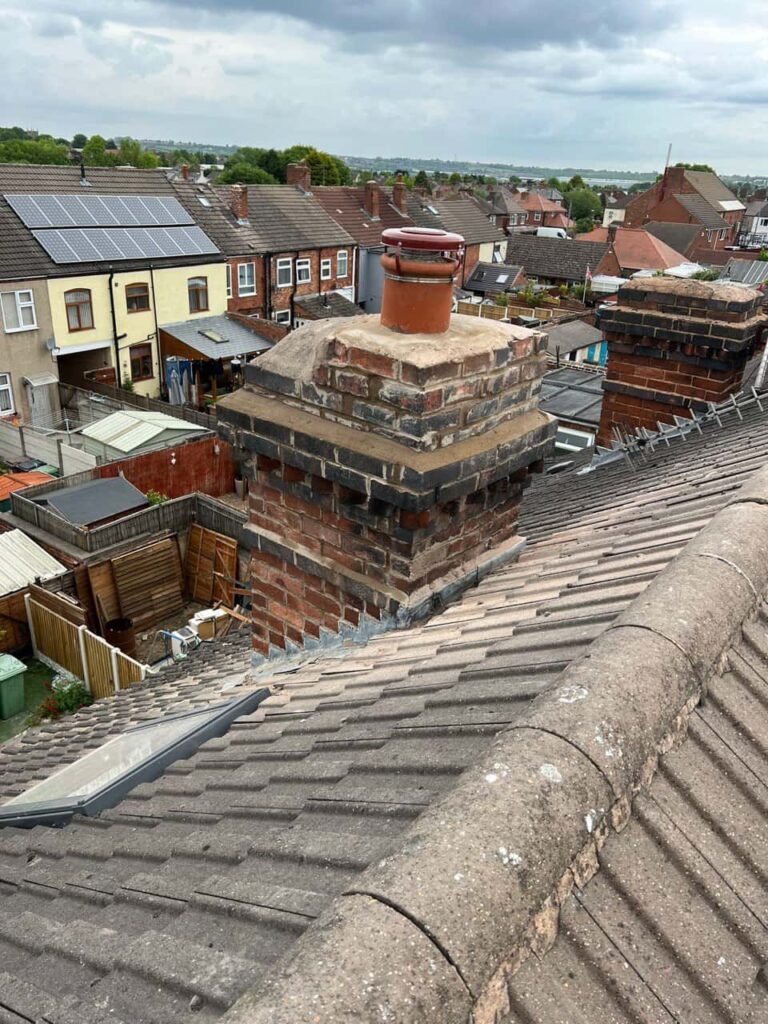
Chimneys are one of the most exposed parts of a property, constantly facing wind, rain, temperature changes, and general weathering. Over time, even well-built chimneys can begin to deteriorate, leading to structural issues and roof leaks if left unattended. For homeowners in Linton, Cambridgeshire, understanding common chimney problems helps ensure they are addressed early and effectively.
This article explains the most frequent chimney repair issues, how they develop, and why timely professional attention is essential.
Why Chimneys Are Prone to Deterioration
Chimneys extend above the main roofline, making them particularly vulnerable to the elements. Unlike other roof areas, they are exposed on all sides, which accelerates wear to brickwork, mortar joints, and flashing details.
As materials age, small defects can quickly worsen, allowing moisture to penetrate both the chimney structure and the surrounding roof area.
Crumbling Mortar and Brickwork
How Mortar Breakdown Occurs
Mortar joints are designed to absorb movement and weathering, but over time they can crack, erode, or crumble. This deterioration allows water to enter the chimney stack, weakening the structure and increasing the risk of loose bricks.
Why Repointing Matters
When mortar begins to fail, repointing restores the joints and helps protect the chimney from further water ingress. Addressing this early prevents deeper structural problems from developing within the stack.
Lead Flashing and Chimney Leaks
The Role of Flashing
Lead flashing seals the junction where the chimney meets the roof. It plays a critical role in directing rainwater away from the roof covering and preventing water from tracking down into the roof space.
How Flashing Failures Cause Leaks
Cracked, loose, or poorly detailed flashing can allow water to bypass the roof covering entirely. Chimney-related leaks are often traced back to flashing defects rather than issues with roof tiles themselves.
Chimney Stack Movement and Instability
Effects of Long-Term Exposure
Repeated weather exposure can cause subtle movement in chimney stacks. This movement places stress on mortar joints and flashing, opening gaps where water can enter.
Risks of Ignoring Structural Issues
An unstable chimney does not only increase the risk of leaks but can also pose a safety concern if masonry becomes loose. Early inspection helps identify these risks before they escalate.
Internal Signs of Chimney Problems
Chimney defects often reveal themselves inside the property before they are obvious externally. Common signs include damp patches around chimney breasts, staining on internal walls, or persistent moisture near the roofline.
These symptoms usually indicate that water has already been entering the structure for some time.
Why Professional Chimney Repairs Are Essential
Chimney repairs require an understanding of both roofing and masonry. A professional approach ensures that all related elements, including brickwork, mortar, and leadwork, are assessed together rather than treated as isolated issues.
At Linton Roofing Repairs, we carry out thorough chimney inspections and professional repairs for properties across Linton, Cambridgeshire, focusing on resolving the underlying causes of deterioration and preventing recurring leaks.
Conclusion
Chimney repairs often begin with small issues such as crumbling mortar or minor flashing defects, but these problems can quickly lead to leaks and structural concerns if ignored. Understanding how chimney components work together highlights why early intervention is so important.
If your chimney in Linton, Cambridgeshire is showing signs of deterioration or causing roof leaks, Linton Roofing Repairs can provide expert assessment and reliable chimney repair solutions to help protect your roof and maintain the long-term condition of your property.
Call us on: 01223 655 294
Click here to find out more about Linton Roofing Repairs
Click here to complete our contact form and see how we can help with your roofing needs.